Tension, Not Fusion




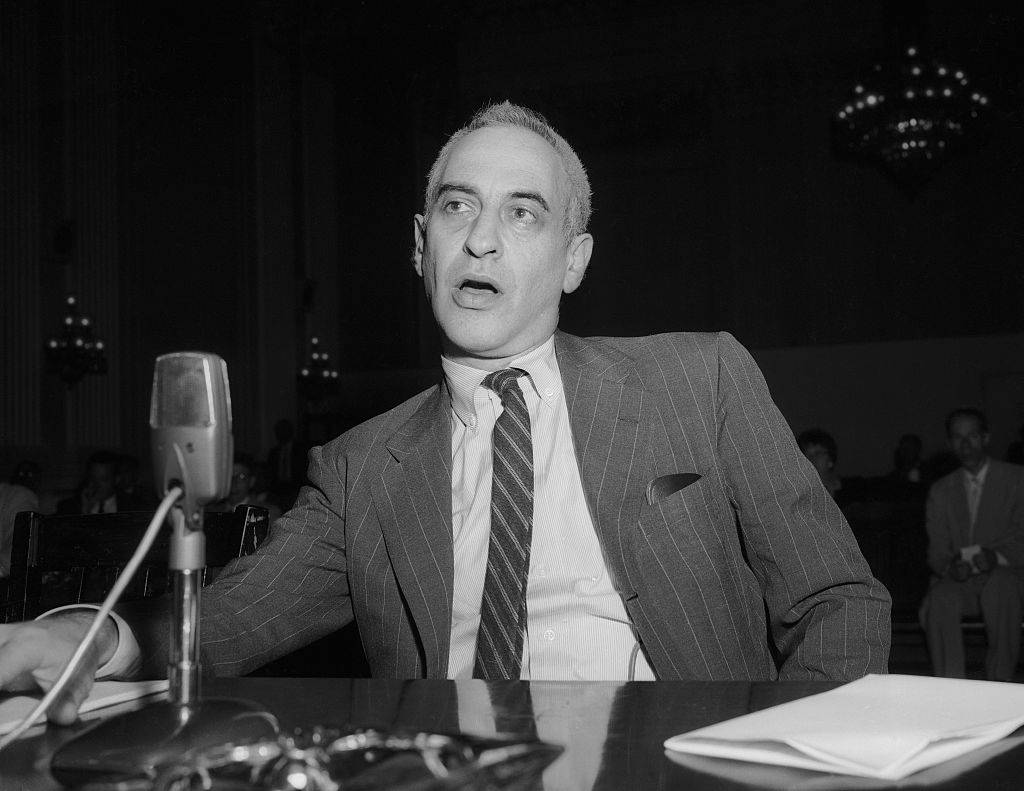
Even if too few contemporary Americans know his name, Frank Meyer was one of the most important political thinkers of the second half of the 20th century in our country. His work proved pivotal to establishing post-war conservatism on philosophical grounds, and to producing an intellectually coherent and politically viable American conservative movement.
Meyer's legacy was controversial even at the height of the conservative ascendancy in America. President Ronald Reagan lauded him for reminding the conservative movement that "robust individualism" secured by the American founding "was part of the deeper current of Western learning and culture." But Russell Kirk, author of The Conservative Mind, excoriated Meyer as an "ideologue of liberty," and even suggested he was just as dogmatic as Karl Marx.
The controversy persists, though more than half a century has passed since Meyer's death. It remains relevant, and Meyer remains a touchstone for the right, because his core project was to articulate the tension between freedom and virtue at the heart of the Western tradition. That tension could never be fully reconciled, but sustaining it could be a source of enormous strength. To his admirers, Meyer seemed to have described the precise character of the West's great potential for flourishing. But to his critics on the right, he covered a profound moral and intellectual wound with a political Band-Aid. One such critic, Meyer's fellow editor at National Review L. Brent Bozell, pejoratively described Meyer's approach as "fusionism," and argued that it was intended to combine two distinct political traditions, libertarianism and traditionalism, into a conservative consensus. For Bozell, fusionism was a philosophical thesis whose sole purpose was to broaden the conservative movement's political appeal. Such criticism persists to this day, and Meyer has become a target of today's "New Right," led by thinkers such as Yoram Hazony and Patrick Deneen.
Bozell's term caught on among Meyer's admirers as well, and it has undermined our understanding of Meyer's goal and contribution — and of what he might offer us now. Meyer's project is not best understood as seeking fusion. It might be better termed "tensionism." It did not deny the persistent tension between the case for freedom and the case for virtue, but rather thought of this tension as a crucial source of the West's capacity to facilitate human thriving.
To revive a fuller understanding of Meyer's tensionism, we should encounter Meyer in his own words, instead of his opponent's mischaracterizations. And we should consider whether tensionism might illuminate the uniqueness of American conservatism and its place in the story of Western civilization. If we are to endorse or to critique Meyer's view, the inquiry must begin by rescuing his thought from under layers of distortion.
THE TWISTED TREE
Born in 1909 to parents of German-Jewish descent in New Jersey, Meyer attended Princeton University before transferring to Balliol College at Oxford University, where he earned his bachelor's degree. He then pursued graduate study at the London School of Economics. In those years, Meyer was a committed communist, even climbing the ranks of the Communist Party in Britain before being deported back to the United States in 1933 for his party involvement. He settled in Chicago, where he continued his work as a communist party apparatchik.
Meyer left communism behind after reading F. A. Hayek's Road to Serfdom during his military service in World War II. After the war, he wrote for The Freeman, a libertarian quarterly, before becoming a founding editor of National Review in 1955 alongside the magazine's founder William F. Buckley, Jr., and editors such as James Burnham and Whittaker Chambers — both of whom, like him, had broken with communism.
Meyer was at his core a political theorist. And he attempted to revive a lost conservative order harkening back not just to the founding of the United States, but to the roots of Western civilization. His case emerged first in his column for National Review, "Principles and Heresies"; in his 1962 magnum opus, In Defense of Freedom: A Conservative Credo; and in a 1969 collection of essays, The Conservative Mainstream. And from the start, Meyer's arguments drew critical responses from his colleagues and fellow conservatives — Bozell perhaps most prominent among them.
Bozell responded to Meyer's essay "The Twisted Tree of Liberty" with his own essay in 1962, titled "Freedom or Virtue?" In that response, he described Meyer's project as seeking to "promote and justify modern American conservatism as a 'fusion' of the libertarian and traditionalist points of view." Papering over profound differences to establish a politically successful conservatism, according to Bozell, was insufficient to take on the challenges America faced during the Cold War and could not ultimately succeed.
According to Bozell, Meyer's project was not philosophically coherent. Its suggestion of a substantive overlap between libertarians and traditionalists was just a pretext to the greater political aim of coalition building in the face of conservatism's "divided house." Freedom, the libertarian lodestar and first principle, was incompatible with virtue, the first principle of traditionalists, according to Bozell. The very notion of a first principle demands that, in this case, freedom or virtue must prevail. The two cannot share a house. Thus, a "fusionism" that combined two distinct first principles was an incoherent mess. Bozell contended that while the political coalition that Meyer sought to construct might form a formidable defense against communism, it would only be possible if the metaphysical disagreements between the two were quelled for the sake of political power. And the cynicism involved in any such effort would render it unworthy of the involvement of serious citizens.
Meyer responded two weeks later in an essay called "Why Freedom." He rejected Bozell's characterization of his work as a concerted effort to fuse libertarianism and traditionalism. In fact, Meyer insisted his thesis was wholly opposite to the idea of conjoining two separate political traditions. His underlying purpose was not shallowly political, he contended, further arguing that the two first principles in question were not best understood as opposed — and therefore were not in need of fusion. Freedom and virtue are not mutually exclusive. They are more than compatible; they are interconnected, even mutually dependent. But they are in tension. Tension is not the same as opposition; it can be sustained and does not require active conflict. But holding these interconnected ideas in tension requires a deep understanding of both, and an appreciation for a politics that is not perfectly unitary.
Freedom and virtue are not separate metaphysical ends tipping the scales so that one's gain must be the other's loss. Meyer wrote:
For the difficulty is that both its major premises are true: on the one hand, freedom is essential to the nature of man and neutral to virtue and vice; on the other hand, good ends are good ends, and it is the duty of man to pursue them. I deny only that in the real situation with which we are dealing these two true premises are contradictories. Rather they are axioms true of different though interconnected realms of existence.
Meyer's In Defense of Freedom concluded with a chapter titled "The Locus of Virtue," where he defined this tension in the context of the greater tradition of the West. "The social order" Meyer wrote, "in tension between the authority of truth and good and the recognition of the fundamental value of the individual person — this is our heritage." The success of the West depends on understanding this tension and on resisting attempts to resolve this enduring state of strain.
Meyer contended that libertarianism and traditionalism are merely political corollaries of a greater tradition of tension between freedom and virtue. The distinct political traditions are deviations from a unified core that believes in a deep connection between freedom and virtue. Each is a deviation in neglecting the importance of the other.
Instead of a fusion of two distinct, mutually exclusive political traditions, as Bozell would argue, Meyer sought to bring back into balance this great tension between freedom and virtue by highlighting their interconnectivity, and its centrality to the American and Western political traditions.
Freedom, according to Meyer, is purely negative — the absence of coercion. "Political freedom," Meyer wrote, "can be defined as freedom from coercion in life, limb, liberty, or property by force or fraud; it has nothing to do with the ideas, the persuasions, the customs which go into forming every human person." Meyer's distinction came just decades after Franklin Roosevelt's New Deal most effectively ratified the notion of positive freedoms in mainstream national politics. Such a positivist view, according to Meyer and other New Deal skeptics, would excuse expansion of the state in order to attain newfound freedoms from social ills.
Meyer recognized the danger of maximalist freedom untethered to moral values but stopped short of assigning the state the duty to define and pursue virtue. He regarded virtue as "man's proper end" and warned that "free individualism uninformed by moral value rots at its core and soon brings about conditions that pave the way for surrender to tyranny." Meyer considered the inculcation of virtue to be the purview of the family and religion, leaving the state to establish conditions "conducive to freedom" to pursue virtue freely and unobstructed from the force of government. He held that no institution — whether civil association, economic order, or educational system — is virtuous in and of itself. The ultimate value of an institution resides in the virtue of the individuals who comprise it. In order to preserve institutions vital to society, the state must protect the autonomy of each individual to shape these establishments toward virtuous ends absent coercion by government.
Meyer recognized that neither freedom nor virtue can stand on its own. Each relies on, as he puts it, "complementary interdependence" in order to sustain the other. For they are not irreconcilable opposites, but the spawn of a "joint heritage." Practically, Meyer referred to this interdependence and joint heritage as "reason operating within tradition" — a heritage that recognizes the role of reason in the pursuit of virtue. Where did this come from? What tradition could conservatives emulate to cultivate this tense balance of freedom and virtue?
According to Meyer, the answer lies in the history of Western civilization. "The history of the West has been a history of reason operating within tradition" he writes. "The balance has been tenuous, the tension at times has tightened till it was spiritually almost unbearable; but out of this balance and tension the glory of the West has been created."
Here lies the great chasm between fusionism and tensionism. Meyer did not propose a political effort to build a coalition among people who disagree fundamentally about the character of the human person and the purpose of society. He suggested deepening the self-understanding of libertarians and traditionalists by helping them to see how deeply interconnected their priorities are when properly situated in a grander narrative of the West.
Bozell's caricature simplified Meyer's complex thesis about America and the West into an attempt to form a political coalition by disregarding the glaring incapacities between the two distinct political persuasions. But Meyer's actual teaching was an essential corrective to, among other things, Bozell's own narrowness of vision about the tradition he sought to defend.
POST-LIBERAL CRITICS OF FUSIONISM
Perhaps unsurprisingly, Bozell's caricature has been more influential than Meyer's actual arguments. A lot of thoughtful people on the right argue with a fusionism they believe is Meyer's. For leading thinkers on today's right, fusionism is also frequently associated with the policy platform of the Republican establishment since the Reagan era — with its combination of free-market economics, social conservatism, and a hawkish foreign policy.
The fusionism of the establishment or "old guard" of the GOP is perceived to be a dead letter since Donald Trump won two presidential elections and remade the party. Trump introduced a new orthodoxy: economic protectionism, a realist foreign policy, and a strategic reorientation of the federal government's role on social issues such as abortion and same-sex marriage. Various thinkers on the so-called "New Right" have, both explicitly and implicitly, zeroed in on Meyer as a key architect of the consensus they seek to replace. They are predictably doing so on Bozell's terms, not Meyer's.
Yoram Hazony is one of the leading lights of the New Right. Hazony is an Israeli-American philosopher, chairman of the Edmund Burke Foundation, and leader of the "National Conservative" movement that hosts the yearly conference "NatCon." In his 2022 book, Conservatism: A Rediscovery, Hazony attempted to recast American conservatism in the terms of a European-style right that predates the liberalism of the American founding. In addition to rediscovering this lost tradition, Hazony sought to tear down the conservatism of the Cold War era, which he argued cannot address the challenges of our time. And Hazony recognized that Cold War conservatism was deeply identified with Frank Meyer.
But much like Bozell, Hazony defined Meyer's view as a "'fusion' of liberalism and conservatism appropriate to conditions in America during the Cold War." He argued, as Bozell did six decades prior, that fusionism was a temporary political project unable to endure and rooted in the particular political demands of its time. A union of libertarians and traditionalists was only possible in the historical context of the Cold War because of their shared enemy, communism. While Hazony believed this was "politically successful," he argued that it effectively "[ratified] the hegemony of liberalism as the sole legitimate political creed in America."
Because he adopted Bozell's characterization (along with other misconceptions such as calling Meyer a "full-blown philosophical rationalist"), Hazony never addressed Meyer's true intentions for his intellectual project of understanding the West. Other post-liberal thinkers, such as Patrick Deneen (the author of Why Liberalism Failed and Regime Change: Toward a Postliberal Future) adopted Hazony's simplistic and merely political understanding of Meyer as well. While Deneen has mentioned fusionism directly only a couple of times, he has done so in the same manner as Hazony, defining it as a fusing of "capitalism and privatized Christian morality."
Hazony and Deneen are instructive of the endurance of a mischaracterization of Frank Meyer's thought. But to tear down the long-standing myth of fusionism, it is not enough to merely castigate misrepresentations. Meyer's project must be considered in its own terms and judged by its own standards.
THE GREAT TENSION
A "fusion" presupposes two separate entities whose conjoining is only possible through an external force that changes their composition in order for them to become one. Thus, fusionism, as characterized by Bozell, implies a concerted effort to conjoin two separate things — namely, libertarianism and traditionalism. Meyer rejected this view of the matter entirely. He sought not to fuse, but to articulate the "instinctive consensus of the contemporary American conservative movement," a consensus that acknowledges an enduring tension between freedom and virtue. To adequately understand this tension, one cannot merely look to the American founding but must return to the roots of the American project and the West: Athens and Jerusalem.
In a 1968 essay in Modern Age titled "Western Civilization: The Problem of Political Freedom," Meyer recounted the formation of Western civilization from its sources in both the Hellenic and Judaic traditions. He posited that the history of the West produced an inertia that led incrementally to individuation, the conscientious process of becoming and recognizing distinct individual persons. Such a process began simultaneously in ancient Greece and Israel, by way of Hellenic philosophy and the Hebrew prophets.
The fruits of Greek philosophy and the Hebrew prophets "burst asunder" the iron grip of "cosmological civilizations," a concept Meyer owed to philosopher and historian Eric Voegelin; Voegelin's multi-volume Order and History was explicitly referenced by Meyer in his Modern Age essay.
Cosmological civilizations or, as Voegelin described, the cosmological myth, was a state of human consciousness wholly innocent of the difference between the spiritual and secular. This myth, according to Voegelin, claimed that there was no distinction between the decision of the state and that of the cosmos or a deity — making the "world" and "being" no different from one another. What was done by the state was merely an extension of the cosmos, just as much as the wind blowing was a result of nature. "To establish a government is an essay in world creation," Voegelin wrote. "When man creates the cosmion of political order, he analogically repeats the divine creation of the cosmos." According to Voegelin, this myth persisted for more than 2,500 years in agrarian societies until the simultaneous rupture of Greek and Judaic civilizations.
In Meyer's account, drawing on Voegelin's concept of the cosmological myth, the Greek departure from cosmological civilization occurred after a long and arduous societal maturation; this process slowly loosed the shackles of the myth concurrently with the formation of the polis. Aristotle used the term polis, translated to "city-state," to refer to a small unit of civilization in which the political, social, and religious norms and beliefs were intertwined. Each individual is a "political animal," gaining value from his membership in the collectivity of the polis.
Although the polis closely resembled the tight unity of the cosmological civilizations by integrating society, government, and religion, the polis differed from that earlier conception by its "necessity of expressing itself through a collectivity." Thus, creating an autonomous sociopolitical force (the collective encompassing the polis), empowered freedom to not be in conflict with an "objective, totally external, force of iron cosmic fatality." Simply put, individual autonomy, in dissenting from the polis, was not going up against the cosmos — represented by the state in cosmological civilizations — but rather a sociopolitical collective. "It was, indeed, a great leap forward towards men's consciousness of their personhood and their freedom," Meyer wrote, "because now the limiting form on individual freedom and individual confrontation of transcendent destiny was a collectivity composed of the subjective spirit of men, not the objective, totally external, force of iron cosmic fatality."
While the Judaic tradition also tore apart from the primordial cosmological unity, it did so in different terms and within a different historical context. The Hebrew prophets — similar to the Greek philosophers — acted as intermediaries between man and the transcendent. The Greeks were political leaders in the polis; the prophets were religious leaders. The b'rith, Hebrew for "covenant" or "agreement," between God (cosmic) and the chosen people (the collective) was one step away from the cosmological myth that denied reason and individuation. Tearing apart the cosmological myth "placed the collectivity of the Judaic people...as the receptor of the interchange with transcendence."
In tearing apart from cosmological unity, there opened, as Meyer described it, a "yawning gulf" between "infinity and finity," or between the finite collective decisions made by the Greek polis and Jewish chosen people and a transcendent objective standard. Sociopolitical decisions would be genuinely human, completely separate from the cosmos.
Such consciousness would not come without risk. By recognizing the "gulf" between the mortal and the immortal, the cosmos and man, a newfound temptation to conjoin the two emerged. Utopianism, or as Meyer called it, "cosmologism's twin," was both the desire to perfect the mortal conditions of man and the desire to replicate the immaterial authority into material institutions to close the gulf. This created a proclivity to deny human imperfection and assert total power over our earthly domain, harkening back to the decision to eat from the Tree of Knowledge in the Genesis story. The utopian temptation, Meyer wrote, "destroys the freedom of the individual person, by forcing upon him conformity to someone else's limited human vision, robbing him of freedom to move towards perfection in the tension of his imperfection."
Utopianism, the temptation of men to "seek refuge from tension by trying to impose their own limited vision of perfection upon the world," also reverted man back to "the womb of the cosmological civilization, in which the tension of life at the higher level of freedom was not required of men, in which they could fulfill their duties in uncomplicated acceptance of the rhythms of the cosmos, without the pain or the glory of individuation." While civilizations under the spell of the cosmological myth were not aware of such a chasm, the post-cosmological civilizations did not enjoy the same innocence.
CHRISTENDOM'S INDIVIDUAL
This quest for individuation took a revolutionary turn at the dawn of Christianity.
According to Meyer, the Incarnation, in which God assumed human form, "enabled men of the West to live both in the world of nature and in the transcendent world, without confusing them." The Incarnation filled the "yawning gulf" between the cosmos and the earth. The West "founded itself, in its inmost core, on acceptance of the tension between the transcendent and the individual human person," Meyer wrote, "and on the reconciliation of that tension implicit in the great vision of the Incarnation — the flash of eternity into time."
Such a revolution was theological but also had an immeasurable political effect. The "gulf" between humanity and the cosmos was bridged by the Incarnation because it was earthly and transcendent at the same time. The utopian temptation was tempered by a recognition that this tension, between the immanent and transcendent, emerged in the person. Having recognized that the bridge was the person, the West's religious and political authorities began to grasp that the preeminent principle of politics was to protect the sanity of this meeting point of tension. Only then can the individual adequately and freely pursue virtue, through institutions such as the family and the church as mediator with the transcendent.
Such a recognition of this tension is not only evident in the great minds of the West, but in the institutions of economy, architecture, and Catholic tradition. Meyer wrote:
At the most mundane level, the economic, the Western credit system takes leave of hard matter, etherealizing money, the very foundation of production and exchange. The Gothic cathedral, thrusting to the heavens, denies the weighty stone of which it is built, while rising from the center of its city it affirms the beauty of materiality. The doctrine of the Lateran Council, central to the philosophical tradition of the West, proclaimed, after a thousand years of intellectual effort, the pure tension of the Incarnational unity, in radical differentness, of the material and the transcendent.
The bygone cosmological civilization and "yawning gulf," however, still live on in the story of the West. The refusal to accept the unresolved tension between freedom and virtue, immanent and transcendent, denies the West its unique contribution to the world and risks a reversion to cosmologism.
Meyer never suggested that the West had perfected a balanced tension. In fact, overcorrections and losses of balance constitute its most traumatic episodes. "The history of the straying in the one and the other direction is the history of the West," Meyer wrote. "But always there remained in the reservoirs of Western consciousness a solution not given to other civilizations, a way out from the impasse of previous human history, the way of its genius — life at the height of tension." By recognizing that this tension is irreconcilable — the ultimate goal, according to Meyer — we can preserve the tension itself.
While the West was consistently moving in the direction of the "life at the height of tension," no society had adequately reached such a peak — that is, until the American founding. European societies could not shake off their cosmological heritage, which permeated their institutions of government. Such a temptation was not felt in the New World. Meyer's account of the American founding was among his most eloquent and passionate, dubbing the United States the very height of "the drama of Western civilization."
But in America, too, the danger of losing sight of the value of holding freedom and virtue in tension is always with us. To sustain that tension is to sustain our politics. But such preservation is never guaranteed.
SANCTITY AND FREEDOM
To describe this argument as shallow coalition politics is worse than error. It is lazy and dishonest. And no one who persists in that description in the 21st century is really familiar with Meyer's thought and arguments.
Those arguments ultimately pointed to the promise of America, where the highest promise of the West might be realized, but the greatest threats to that promise are present, too. As Meyer put it:
In the open lands of this continent, removed from the overhanging presence of cosmological remains, they established a constitution that for the first time in human history was constructed to guarantee the sanctity of the person and his freedom. But they brought with them also the human condition, which is tempted always by the false visions of Utopianism.
The establishment of a free constitution is the great achievement of America in the drama of Western civilization. The struggle for its preservation against utopian corrosion is the story of the United States since its foundation. That struggle continues to this day; its end is not yet decided.
By connecting the American republic to the roots of the West, Meyer reminded conservatives that the preservation of the United States is not just the conservation of a political order nearly 250 years old, but of a civilizational tradition of enduring tension between freedom and virtue that dates back thousands of years.
Meyer's tensionism — rooted in the dual inheritance of Athens and Jerusalem, culminating in the Christian Incarnation, and driving our national story — positioned the individual as the nexus of an endless tug of war between freedom and virtue, the transcendent and the temporal. Meyer's recovery of this heritage was not a political endeavor but a civilizational calling.
At a time when conservatives are again looking for an organizing principle for their intellectual and political projects, recovering Frank Meyer's thought on his own terms is vital. Only through such a recovery might we see the real potential of a renewed conservatism — a potential not just to pursue a convenient fusion between libertarians and traditionalists, but to preserve the life-giving tension between freedom and virtue that defines the West and continues to shape America.
